

Hearing Devices
Helping Baby Adjust to Hearing Devices
Keeping Baby's Hearing Devices in Place and Protected
A lot of parents have problems keeping their baby's hearing devices in place. There is not one solution that will work for everyone. Try different options to see what works best for your baby. Many of the approaches shared below have technology-specific options or will work with different hearing technology (hearing aids, cochlear implants, FM/Remote Microphone systems, bone anchored devices). Ask your audiologist for assistance in selecting what might work best for your child and your situation.
Pilot Caps
Some families have found pilot caps (a type of bonnet) to help with device use in toddlers with busy hands. The examples below use a mesh fabric to avoid blocking the device microphones.
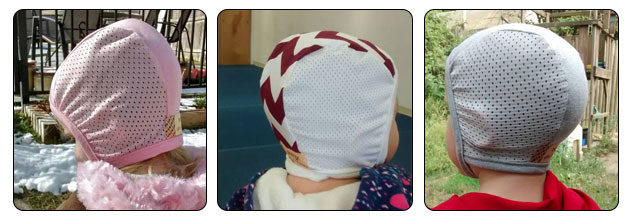
Pilot caps were created and photographed by: https://www.etsy.com/shop/AnchorYourHearing
Headbands for Tots
Many families have come up with creative ways to modify headbands and accessories to help their little ones keep hearing aids and cochlear implants on and in place. Headbands are one option that help keep devices secure on younger and older active children. Most headbands are made of a stretchy material with small loops that hold the hearing aids and cochlear implants in place by the child's ears. Here are some examples of different headband styles. As you will see, they are appropriate for younger and older children.
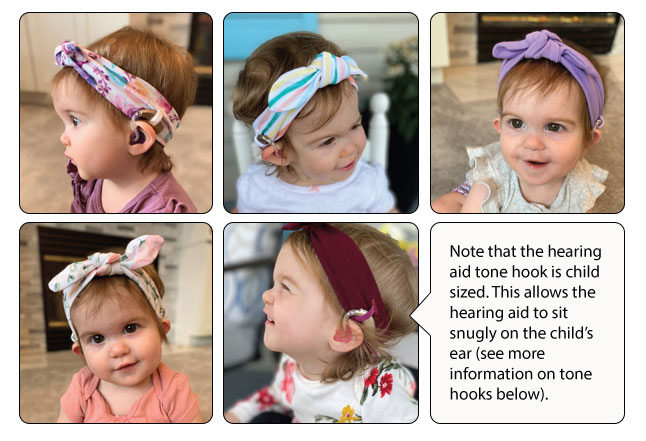
Bow headbands created an photographed by: https://www.etsy.com/shop/AidedBeauty
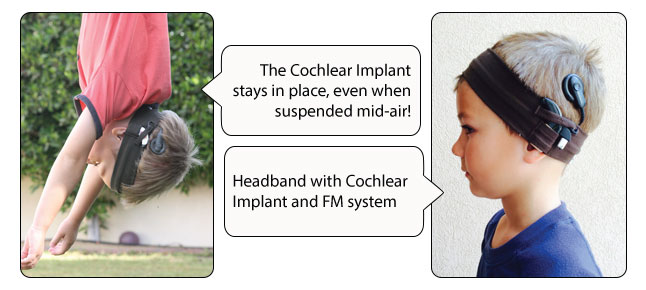
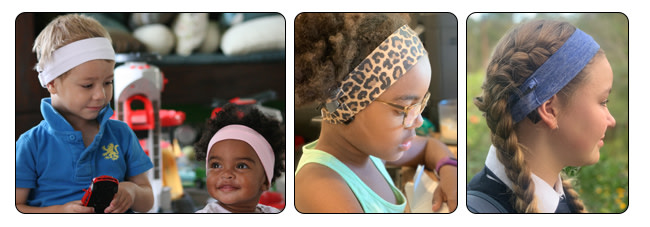
Hearing Henry headbands created by and photographs provided by: https://hearinghenry.com/
Another Headband Option is called Ear Suspenders
Below are pictures of children using Ear Suspenders:
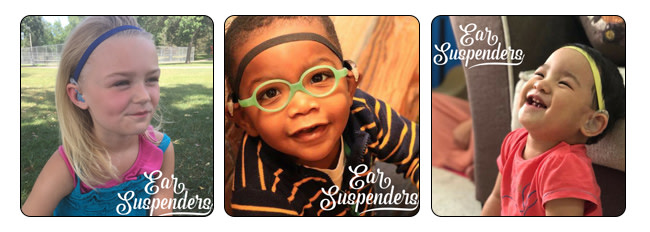
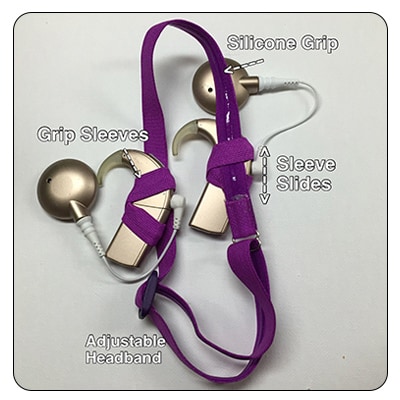
Diagram for using Ear Suspenders with Cochlear Implants
Ear Suspender headbands created by and photographs provided by: https://earsuspenders.com/
Other Accessories:
Ear Gear
Ear Gear is a product that is like sleeves for your child's devices. They help to protect the devices from damage, loss, and things like sweat, dirt, or noise from wind. They come in various sizes and types to accommodate different kinds of devices and can even attach to eyeglasses. Both corded and cordless versions are available. With the corded version, the cords connect to a clip (pictured) that attaches to the child's shirt. Corded versions offer another layer of protection from loss for little ones (if the device comes out, it will dangle from the cord that is clipped to the back of the child's shirt). For more information visit: https://www.gearforears.com/
For Hearing Aids
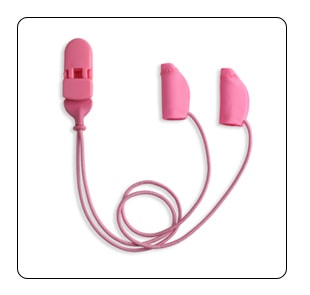
Ear Gear Micro (for hearing aids 1” and smaller) – All style
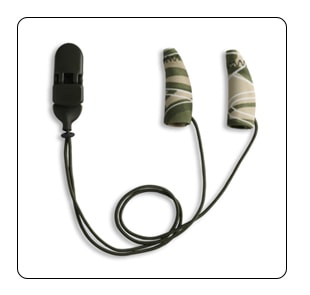
Ear Gear Mini (for hearing aids sized 1 to 1.25 inches).
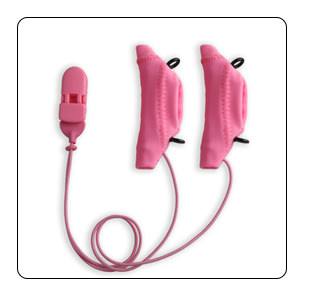
For Use with Eyeglasses
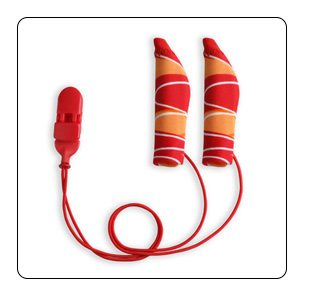
For Hearing Aids with FM/Remote Microphone devices
For Cochlear Implants
Ear Gear Rondo (fits MED-EL’s Rondo and Cochlear’s Kanso processors)
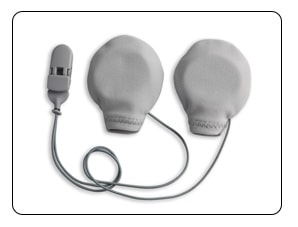
Corded
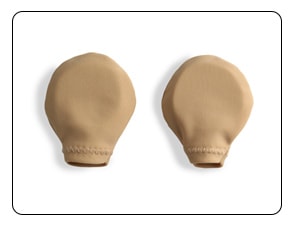
Cordless
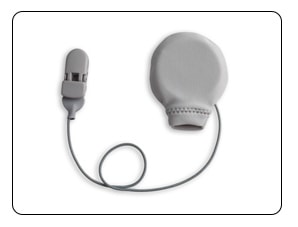
Mono (for one device)
Ear Gear Cochlear (fits various Cochlear, Advanced Bionics, and MED-EL processors)
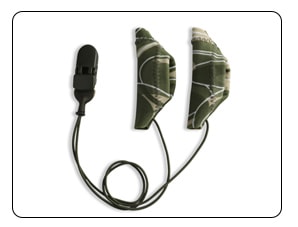
Ear Gear Cochlear for use with Eyeglasses
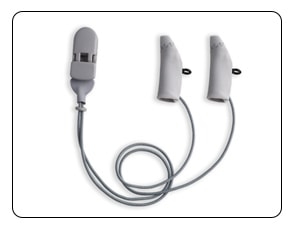
Ear Gear Cochlear for use with Eyeglasses
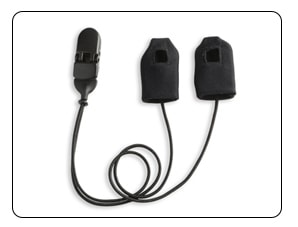
Corded
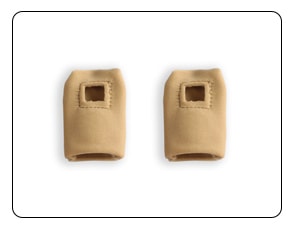
Cordless
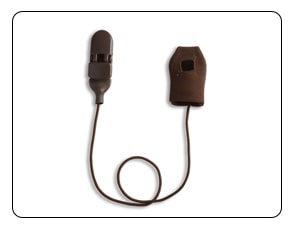
Ear Gear Baha mono with cords
Huggie Aids™
These devices hold hearing aids in place without adhesives. It uses a soft rubber ring or sleeve that the hearing aid sits in attached to a soft rubber ring that sits around the ear in order to hold them in place on the baby's ears.
Hearing Aid Clips
Colorful clips can be used to attach hearing aids to a child's clothing.
Some hearing aid clips will help hold FM/Remote Microphone receivers in place on the hearing aid
For more information, visit: https://www.etsy.com/market/hearing_aid_clip_for_kids
Dental Floss and Fishing Line
Dental floss tied to a safety pin may not be as colorful as the above choices, but it can give the same security. One end of the floss or line is tied around the tone hook of the hearing aid and the other end of the floss is tied to a safety pin. The safety pin can be attached inside your child's clothing. It is important keep a short length on the floss or line.
Special Tape or Adhesives
Toupee or wig tape can help hold the hearing aids in place behind the baby's ears. Special roll-on adhesives can also be used on the side of the hearing aid to help it stick to the skin behind the ear.
Important note: The tape needs to be changed often. Some babies may be allergic to the adhesive; parents need to look for signs of irritation from the tape. Special toupee or wig tape should be used and not simply double-sided tape as the toupee and wig tape are meant for contact with the skin and are less likely to cause any irritation to the skin.