


Hearing Devices
Cochlear Implants
What is a Cochlear Implant?
Cochlear implants are devices that can provide sound for people who receive little or no benefit from hearing aids. Hearing aids make sounds louder. However, for children and adults who have severe to profound hearing loss, making sounds louder may not be enough to allow the ear to process sound.
In some cases, a cochlear implant may be more successful than hearing aids because it bypasses the damaged cochlea and directly stimulates the hearing (auditory) nerve. Part of the cochlear implant includes tiny electrodes that are surgically inserted into the cochlea. The cochlear implant converts sound into electrical signals that go to the auditory nerve.
What is a Cochlear Implant?
A cochlear implant is a little bit different than a hearing aid. 0:06 It has two pieces to it, so one piece is surgically implanted and that has an electrode that goes 0:12 in the inner ear and provides stimulation to the hearing organ and then it has an outside 0:17 piece that’s kind of like a hearing aid and picks up sound from the surroundings. 0:21 When someone goes forward to get a cochlear implant, they have to undergo surgery so it’s 0:25 going to be under a general anesthesia. 0:27 We make an incision behind the ear and have a little pocket of tissue where we put the 0:32 implant and then we drill out the bone behind the ear, which is almost like a sinus for 0:36 the ear which allows us access to the inner ear to be able to put the electrode in.
Who is eligible for a Cochlear Implant?
Anyone from young babies to adults can have a cochlear implant, usually its patients that have severe to profound hearing loss that aren’t achieving benefit from their hearing aids. For kids often when they’re young babies if they’re diagnosed with a hearing loss, they often have to go through a trial of hearing aids for a few months to see if they’re getting any benefit from that but usually when it’s been detected early on after they’re born that they have a severe hearing loss we start them on the pathway of considering a cochlear implant usually around the age of one. For adults, it’s a little bit different and every person’s hearing loss is very individual and so often patients will have a time period where they’re using hearing aids and just the hearing loss is progressing to a point that they need to get an implant because it’s not providing them benefit anymore.
The Cochlear Implant Team
Here at Boys Town, we have a team of individuals that includes audiology, speech and the physicians or surgeons that put the implant in as well as nurses, coordinators and other staff that kind of help take care of patients and determine if someone’s a candidate, so even the initial process to determine if you’re a candidate takes a couple of visits and appointments. The surgery lasts a few hours and then you go home that same day. It’s a day procedure but then afterwards is when the work really begins. When someone gets an implant right away, they can’t just turn it on and hear right away, it takes a lot of time for the patient’s brain to process what that new sound is, where patients have to learn what the new sound is that’s provided from the cochlear implant device and that requires a lot of visits with audiology as well as the speech-language pathologists afterwards with especially within that first year.
Why is this technology so important
For adults who have gone a period of time where they had a sudden hearing gloss or have really been struggling for years they’re very excited for the first time in a while that they’ve been able to participate in their social activities and really hear what their spouse is saying or communicate at work and it’s really a life changer for them. I can’t believe I’m hearing you. This is amazing. And the same thing for kids too, when parents start to see that they’re having more interactions with their child that was born without hearing and really seeing that they could potentially be developing at the same rate of someone who has normal hearing is really exciting. I think this is one of the great parts of my job. I think communications is just so important and just you know having interactions with your family and relationships and when someone can’t hear and understand what people are talking to them, especially in adults they isolate themselves from those situations and be able to help them restore those relationships is a great feeling to be able to help, and also for kids this is a very vulnerable time for them to develop and to be able to have that relationship with their parents and help with communication as well as develop as an individual and learn in school it makes me feel really excited that I can be a part of that.
Cochlear Implant Manufacturers
There are several manufacturers of cochlear implants such as Advanced Bionics Corporation, Cochlear Americas, and Med-El. The cochlear implant-regardless of the manufacturer-is comprised of both internal and external components.
Popular Questions about Cochlear Implants
How Does a Cochlear Implant Work?
The cochlear implant, regardless of the manufacturer, is comprised of 2 parts:
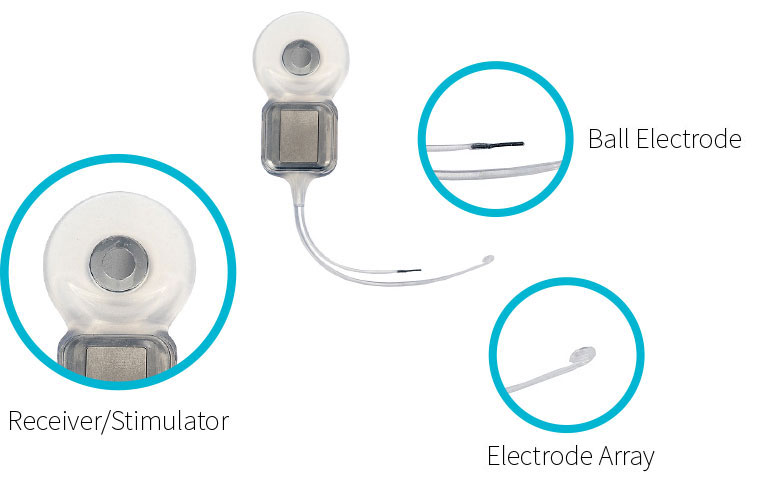
- internal portion (receiver)
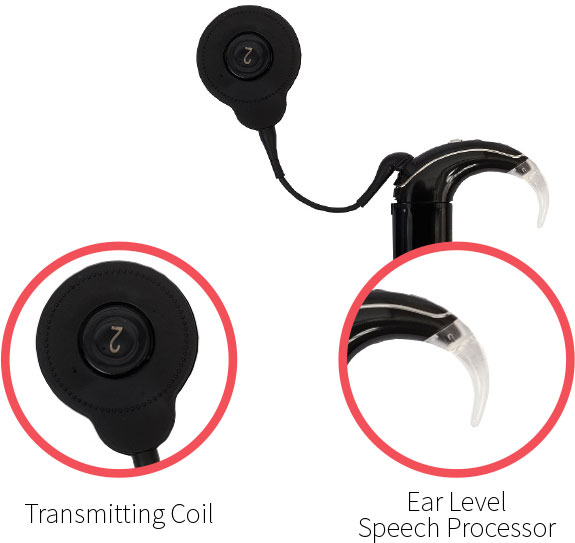
- external portion (speech processor)
Internal Portion: Receiver
The internal device is implanted surgically and has a magnet, receiver, and an electrode array. The receiver is surgically placed under the skin behind the ear. The electrode array is inserted into the cochlea. More recent internal devices contain magnets which are MRI compatible. Still, a cochlear implant recipient should always contact their physician prior to undergoing an MRI.
External Portion: Speech Processor
The external portion called the speech processor can come in a variety of sizes and wearing options.
Standard features include:
- A battery is used to power both the external and internal portion.
- The processor which may be built within or connected to a headpiece via a cable.
- The headpiece contains a transmitting coil and magnet.
- The magnet attaches to the surface of the head where the internal portion of the implant is located and allows the transmitting coil to send the signal to the internal device.
Speech processors come in many styles including behind the ear, bodyworn, and single unit processors.
- These styles are available in an array of colors.
- Some processors are waterproof and can be worn in the pool or the bathtub.
- Processors can utilize rechargeable and/or disposable batteries.
- Microphones can be found directly on the processor (behind the ear models) or on the headpiece (body worn and single processor units).
- Volume changes can be made via controls directly on the unit for some processors. Others may require a remote control accessory or a phone application to make changes. Some processors provide both options.
- Some processors can connect to phones for direct streaming or utilize a streaming accessory to connect to phones or other audio devices (e.g., Televisions, computers, or audio systems).
How Does the Cochlear Implant Work?
Cochlear implants enable individuals with severe to profound hearing loss to hear by receiving and processing sounds and speech they were unable to access via a hearing aid. The internal and external devices work together to change sound into electrical signals that stimulate the hearing nerve.
- First, the microphone(s) located on the external device, picks up the sound energy. The speech processor (1) then filters, analyzes, and converts the sound energy into a digital code.
- That signal is sent through the cable to the headpiece where it is transmitted across the skin to the internal receiver (2), via radio frequencies.
- The internal receiver distributes the signal to the electrodes along the array which has been placed inside the cochlea (3).
- The electrodes send tiny electrical charges that stimulate the auditory nerve (4) which is connected to the cochlea. By stimulating the auditory nerve directly, the cochlear implant bypasses the damaged parts of the cochlea that cause hearing loss.
- The auditory nerve then carries the electrical signals to the brain where they are interpreted as sound. This process occurs so rapidly that the listener will hear speech and other sounds without any noticeable delay.
More information about specific cochlear implant manufacturers:
External Portion: Speech Processor
The external portion called the speech processor can come in a variety of sizes and wearing options.
Standard features include:
- A battery is used to power both the external and internal portion.
- The processor which may be built within or connected to a headpiece via a cable.
- The headpiece contains a transmitting coil and magnet.
- The magnet attaches to the surface of the head where the internal portion of the implant is located and allows the transmitting coil to send the signal to the internal device.
Speech processors come in many styles including behind the ear, bodyworn, and single unit processors.
- These styles are available in an array of colors.
- Some processors are waterproof and can be worn in the pool or the bathtub.
- Processors can utilize rechargeable and/or disposable batteries.
- Microphones can be found directly on the processor (behind the ear models) or on the headpiece (body worn and single processor units).
- Volume changes can be made via controls directly on the unit for some processors. Others may require a remote control accessory or a phone application to make changes. Some processors provide both options.
- Some processors can connect to phones for direct streaming or utilize a streaming accessory to connect to phones or other audio devices (e.g., Televisions, computers, or audio systems).
How Does the Cochlear Implant Work?
Cochlear implants enable individuals with severe to profound hearing loss to hear by receiving and processing sounds and speech they were unable to access via a hearing aid. The internal and external devices work together to change sound into electrical signals that stimulate the hearing nerve.
- First, the microphone(s) located on the external device, picks up the sound energy. The speech processor (1) then filters, analyzes, and converts the sound energy into a digital code.
- That signal is sent through the cable to the headpiece where it is transmitted across the skin to the internal receiver (2), via radio frequencies.
- The internal receiver distributes the signal to the electrodes along the array which has been placed inside the cochlea (3).
- The electrodes send tiny electrical charges that stimulate the auditory nerve (4) which is connected to the cochlea. By stimulating the auditory nerve directly, the cochlear implant bypasses the damaged parts of the cochlea that cause hearing loss.
- The auditory nerve then carries the electrical signals to the brain where they are interpreted as sound. This process occurs so rapidly that the listener will hear speech and other sounds without any noticeable delay.
More information about specific cochlear implant manufacturers: